

Textile & Apparel Passport: Every Product Has a Story. Make It Traceable.
Connect materials, suppliers, certifications and product experience in one trusted Digital Passport. Prepare for upcoming EU requirements introducing transparency that customers, retailers and partners can trust.
Why Act Now?
Textile apparel is one of the priority product groups under the Ecodesign for Sustainable Products Regulation (EU) 2024/1781. The European Commission currently plans adoption of the textile-specific delegated act in Q4 2027.
The delegated act is expected to define the applicable ecodesign and Digital Product Passport (DPP) requirements, including product scope, passport data, access rules, data carrier and passport granularity.
Preparing now gives brands and manufacturers time to map product and supplier data, identify evidence gaps and establish processes needed for smooth DPP implementation.
Textile Apparel in Scope
The exact scope will be defined through the future textile-specific delegated act. Current preparatory activities focus on a broad range of apparel product categories.

Apparel Collections
T-shirts, shirts, knitwear, denim, dresses, tailoring, trousers and everyday garments.
Outerwear & Performance Apparel
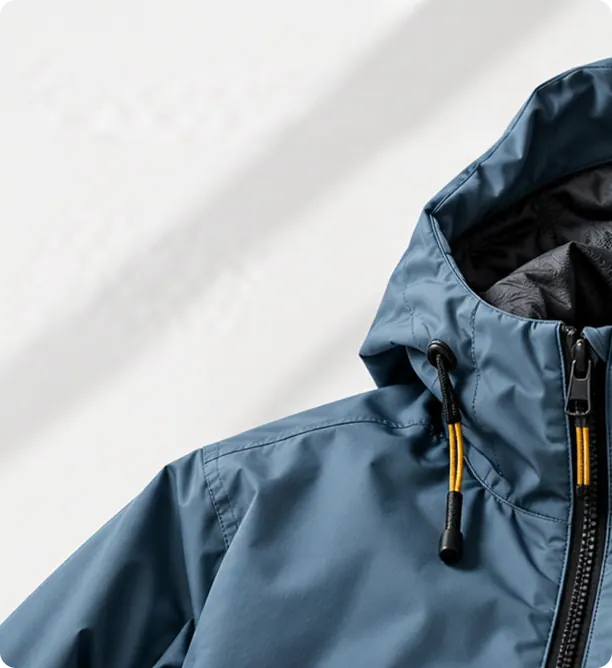
Jackets, textile-based coats, sportswear, technical apparel and selected workwear categories.

Underwear, Hosiery & Swimwear
Underwear, socks, swimwear and related garments.

Textile Accessories
Scarves, gloves, hats and other textile-based apparel accessories.

Indicative scope based on current ESPR preparatory work; final requirements remain subject to future legislation.
Your Product. Your Brand. Your Passport.
We build every Passport to reflect your brand, ensuring it looks and feels like a natural extension of your product experience.
- For apparel and fashion brands, the Passport becomes a digital extension of the physical product, showcasing your identity, values, and style.
- For manufacturers, it provides a structured approach to managing increasing information requirements across complex and evolving supply chains.
- For sourcing, procurement, and compliance teams, it establishes a common framework for connecting suppliers, materials, certifications, and supporting evidence.
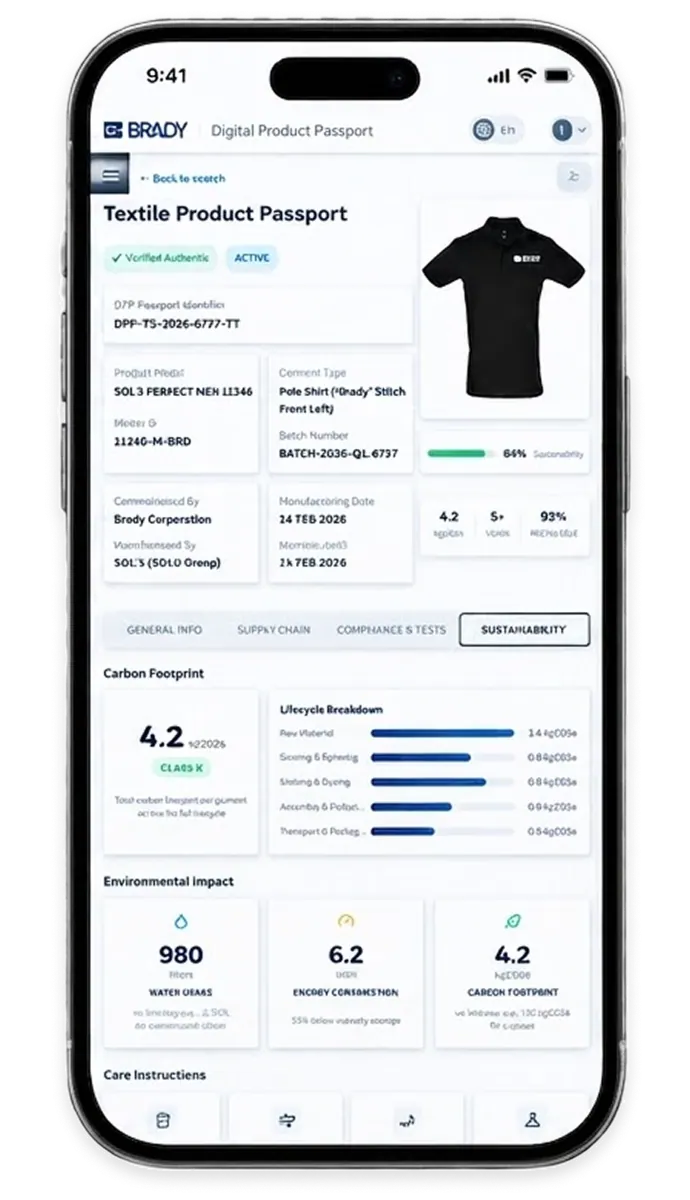
The Textile & Apparel Passport enables organizations to deliver customer-facing experiences that reflect their brand while maintaining a trusted, governed foundation of product data behind every item.
Our platform allows companies to quickly assemble their customer-facing interface:
- Showcase products with rich imagery
- Present brand and collection information
- Apply brand colour-palette and visual identity
- Tailor content to different audiences
- Combine required passport information with product storytelling
- Share sustainability, sourcing and care information
The result is a Passport that delivers transparency and compliance while preserving the brand experience and strengthening customer engagement.
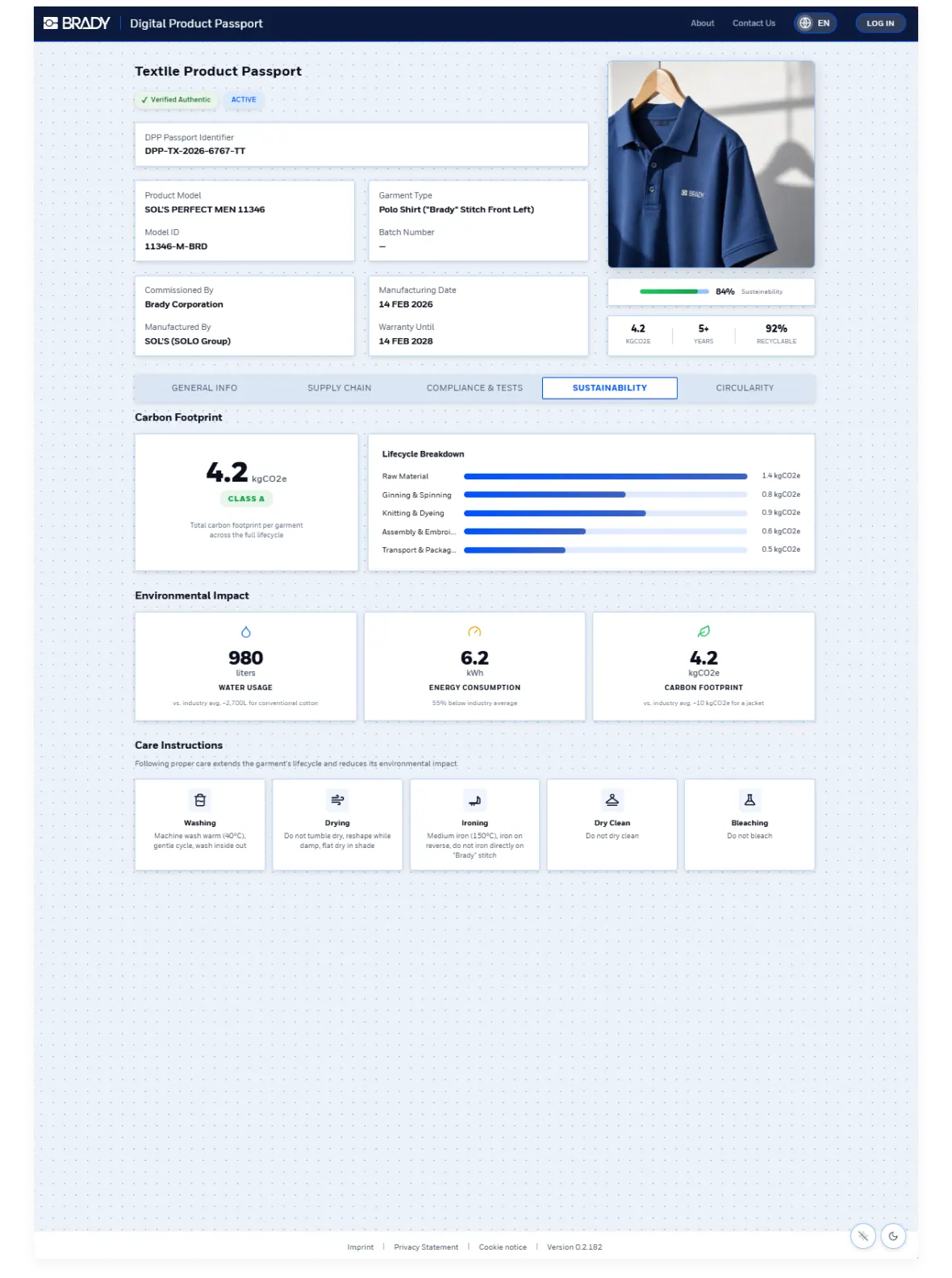
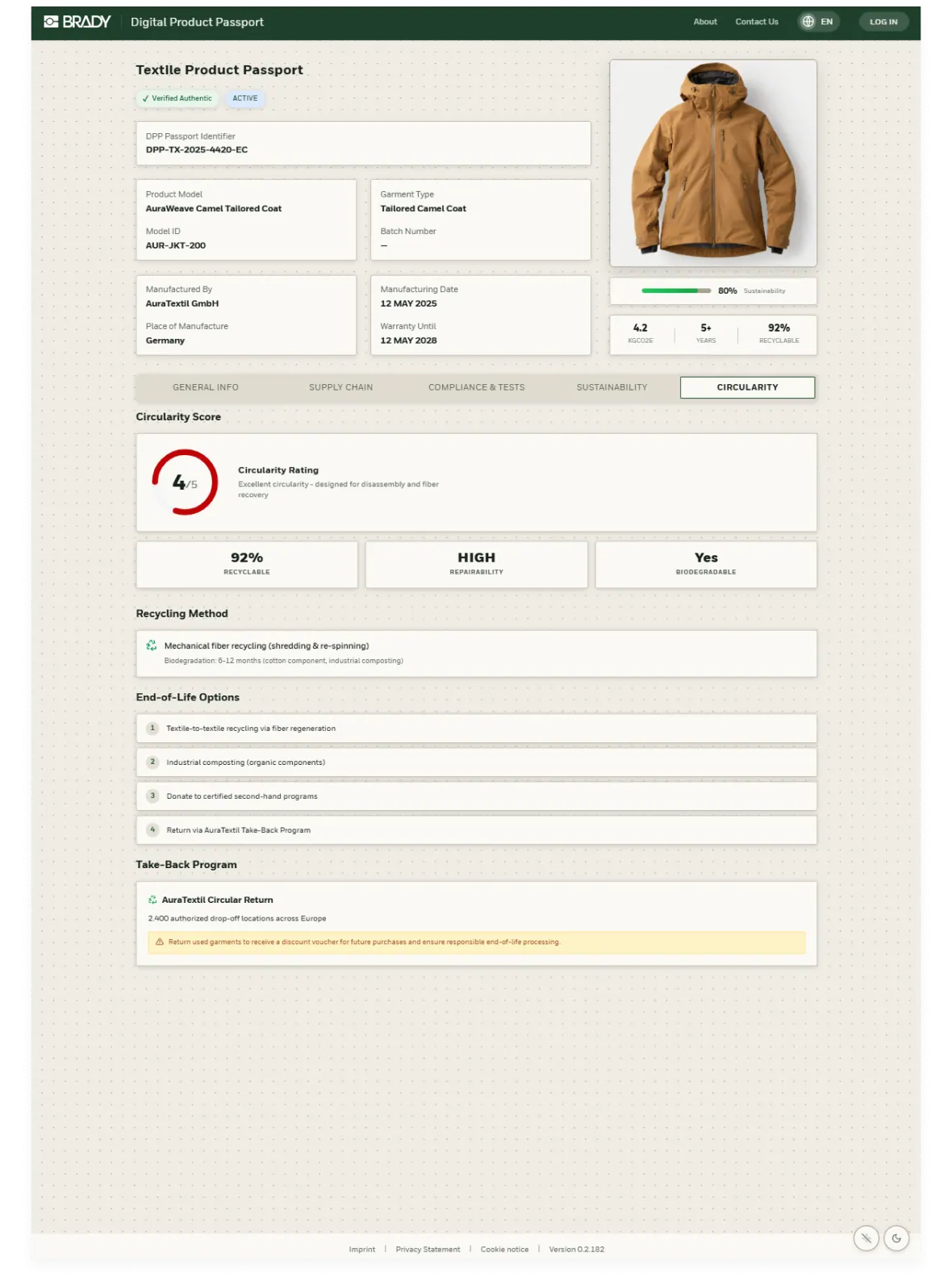
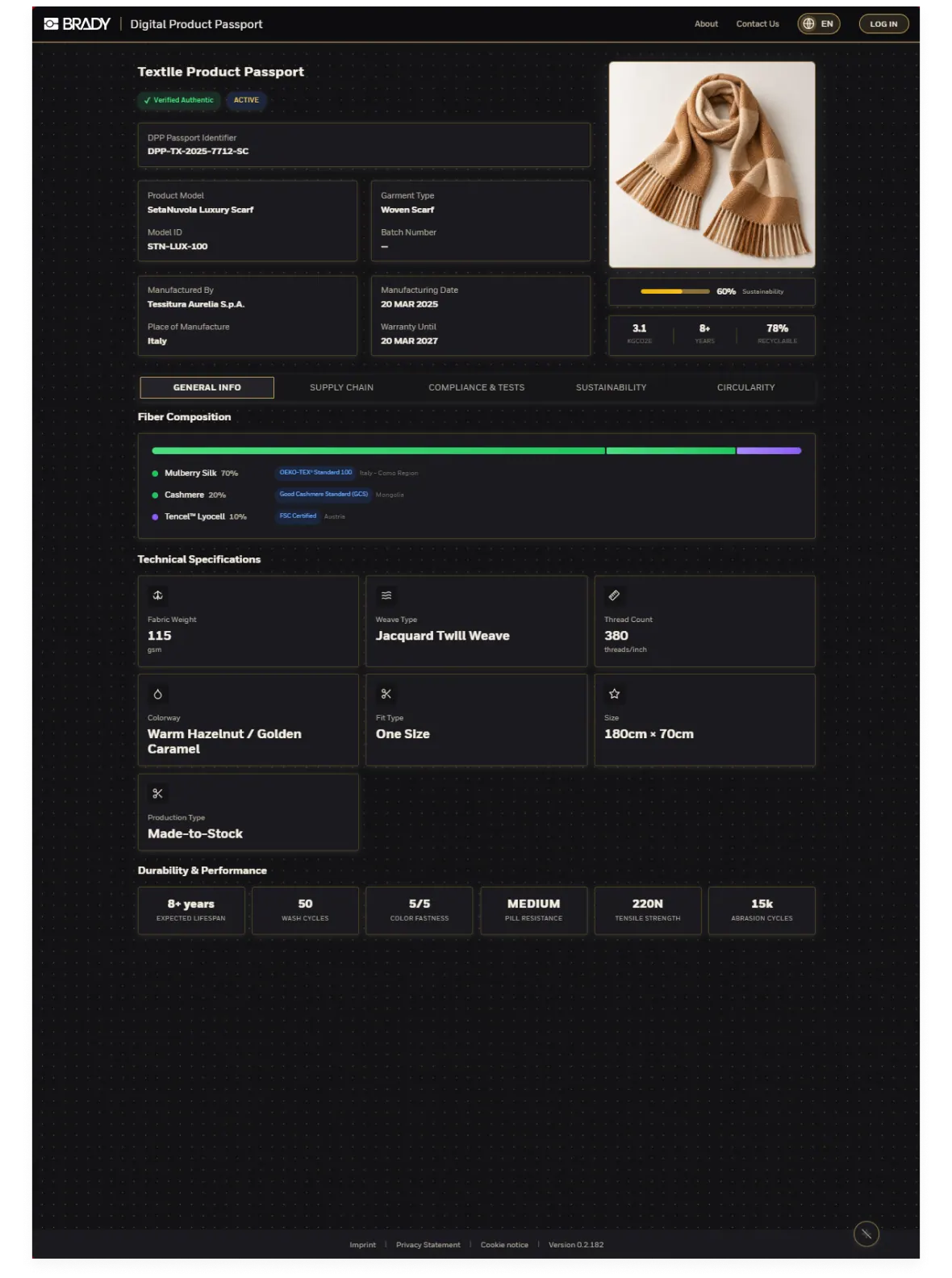 Image 2 of 3
From Fibre to Finished Garment
Few industries operate supply chains as extensive and interconnected as fashion. A single garment may involve fibres from one region, fabrics from another, trims from multiple suppliers and manufacturing activities spread across several countries.
As products become more complex, transparency becomes harder to maintain.
The Textile & Apparel Passport creates connections between products, materials, suppliers, manufacturing activities and supporting evidence, helping organizations build a more complete and traceable product record.


Today, transparency is about helping people understand where information comes from, how it can be verified and what evidence stands behind it. Digital Product Passports are designed to make that process simpler for everyone involved.
Download BrochureTransparency Starts Long Before Retail
The Textile & Apparel Passport helps manufacturers establish a repeatable process for collecting, maintaining and sharing trusted product information without creating additional administrative burden for every customer request, retailer inquiry or regulatory requirement.
The Passport provides a structured approach to supplier engagement, helping sourcing, procurement and sustainability teams:
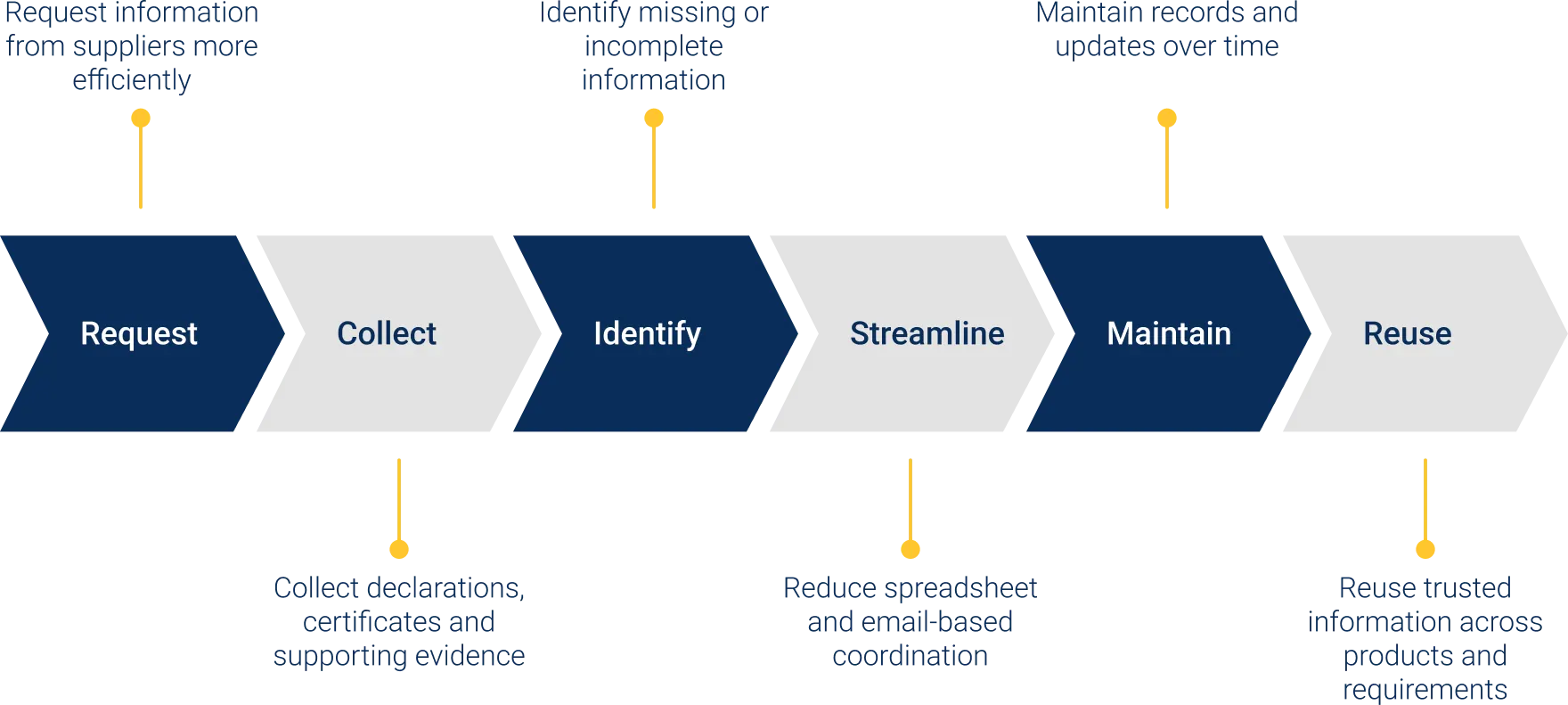
By establishing a structured information framework, manufacturers can respond more efficiently to customer expectations while improving consistency across products and production sites.
Who Needs to Prepare and Why?

Brands & Fashion Companies
Connect product, sourcing, sustainability and compliance information while creating a branded customer experience.
Apparel Manufacturers
Manage product, material, production and evidence data across customers and production sites.
Material & Textile Suppliers
Provide fibres, materials, declarations, certifications and other relevant supporting information.
Importers, Retailers & Marketplaces
Access the information required to place and sell products in the EU.
Circular-Economy Partners
Use structured product information for repair, resale and recycling.
Information Behind the Passport
A trusted passport starts with trusted data. The Textile & Apparel Passport brings together information from multiple systems and stakeholders into a governed product record.
- Product identification and description
- Brand, model, collection/ season
- Size, colour and product characteristics
- Manufacturing and market information
- Material composition and fibre content
- Origin of materials and components
- Supplier and manufacturing information
- Traceability across the supply chain
- Responsible sourcing information
- Environmental attributes
- Carbon and environmental footprint data
- Recycled, renewable and certified content
- Materials and energy use
- Sustainability claims and supporting evidence
- Durability and expected lifetime
- Care, maintenance and repair information
- Reuse, resale and refurbishment
- Disassembly and material recovery
- Recycling and end-of-life guidance
- Chemical composition and substance declarations
- Dyes, finishes and chemical treatments
- Restricted and hazardous substances
- Safety and testing information
- Chemical compliance and supporting evidence
- Supply-chain due diligence
- Child-labour and forced-labour related information
- Responsible sourcing and supplier standards
- Social compliance and certifications
- Supporting declarations and evidence
- Data ownership and responsibility
- Access rights and stakeholder permissions
- Verification status
- Audit trail and data provenance

Indicative DPP-readiness categories; specific requirements remain subject to the ESPR delegated act.
How It Works
Easily collect supply chain data, build compliant digital passports, and deliver full product transparency in five simple steps.
Connect relevant ERP, PLM, PIM, compliance, sustainability and supplier information.
Access Textile & Apparel PassportBeyond the QR Code: Connected Product Identity
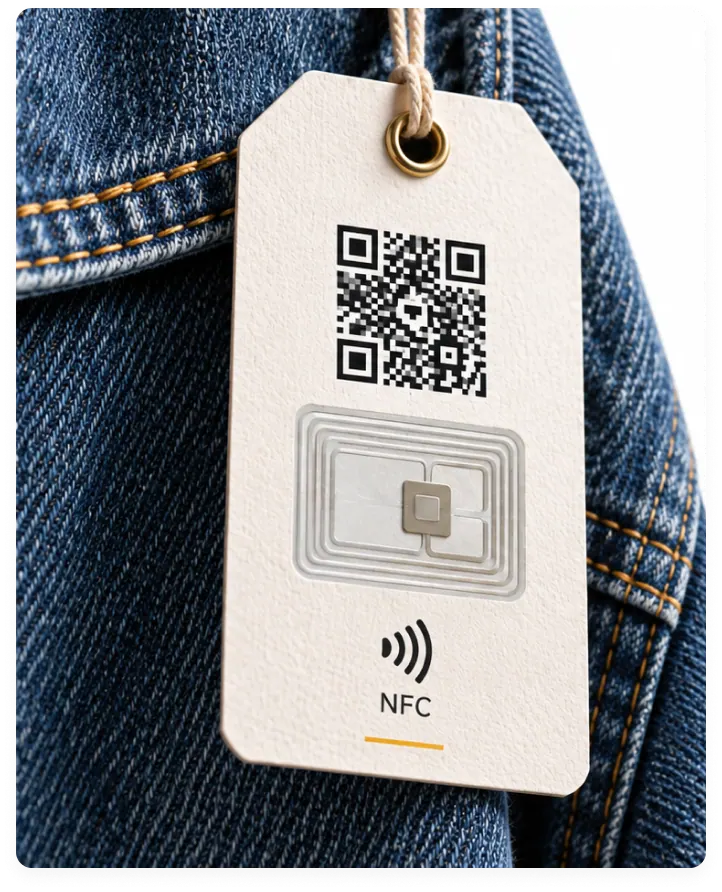
Different identification technologies support different regulatory and operational use cases.
QR Code
Simple smartphone access to product and passport information.
RFID
Fast, contactless identification across manufacturing, logistics, inventory and retail operations. Item-level RFID can also support inventory visibility, traceability, omnichannel operations and circularity processes.
NFC
Close-range interaction that provides product authentication and enhanced customer experiences.
Ready for Model, Batch or Item-Level Passports
Use the granularity required by the applicable regulation and product use case.

Model
Shared product characteristics and applicable regulatory information.

Batch
Production-specific information linked to a defined production lot.

Item
Unique identity and lifecycle information for individual garments.
Secure Access and Data Protection
A Textile & Apparel Passport must make required information accessible without exposing confidential supplier, commercial or technical information indiscriminately.

Consumer
Product composition, care information, origin and selected sustainability information.

Business Partner
Product information, declarations and evidence appropriate to the relationship.

Circularity Partner
Material, care, repair, sorting and recycling information.

Regulator / Authorised User
Required compliance information, supporting evidence and audit trail.
Role-based access helps make required information accessible while protecting confidential, commercial and sensitive content.
Access Textile & Apparel PassportFrom Passport Records to Business Value
A Textile & Apparel Passport starts with compliance. The same structured product identity and data can support additional value across the product lifecycle.

Build Trust
Give customers, retailers and partners access to the information behind the product, not just marketing claims.

Improve Supply-Chain Visibility
Create stronger connections between products, materials, suppliers and manufacturing activity.

Enable Circular Services
Support repair, reuse, resale and recycling with persistent product information.

Protect & Extend Product Value
Use trusted digital identity to support authentication and maintain useful product information beyond the first sale.
Built on Proven Regulated-Industry Experience
Mature implementation experience, large-scale data processing and regulated-industry know-how for complex compliance and traceability programs.
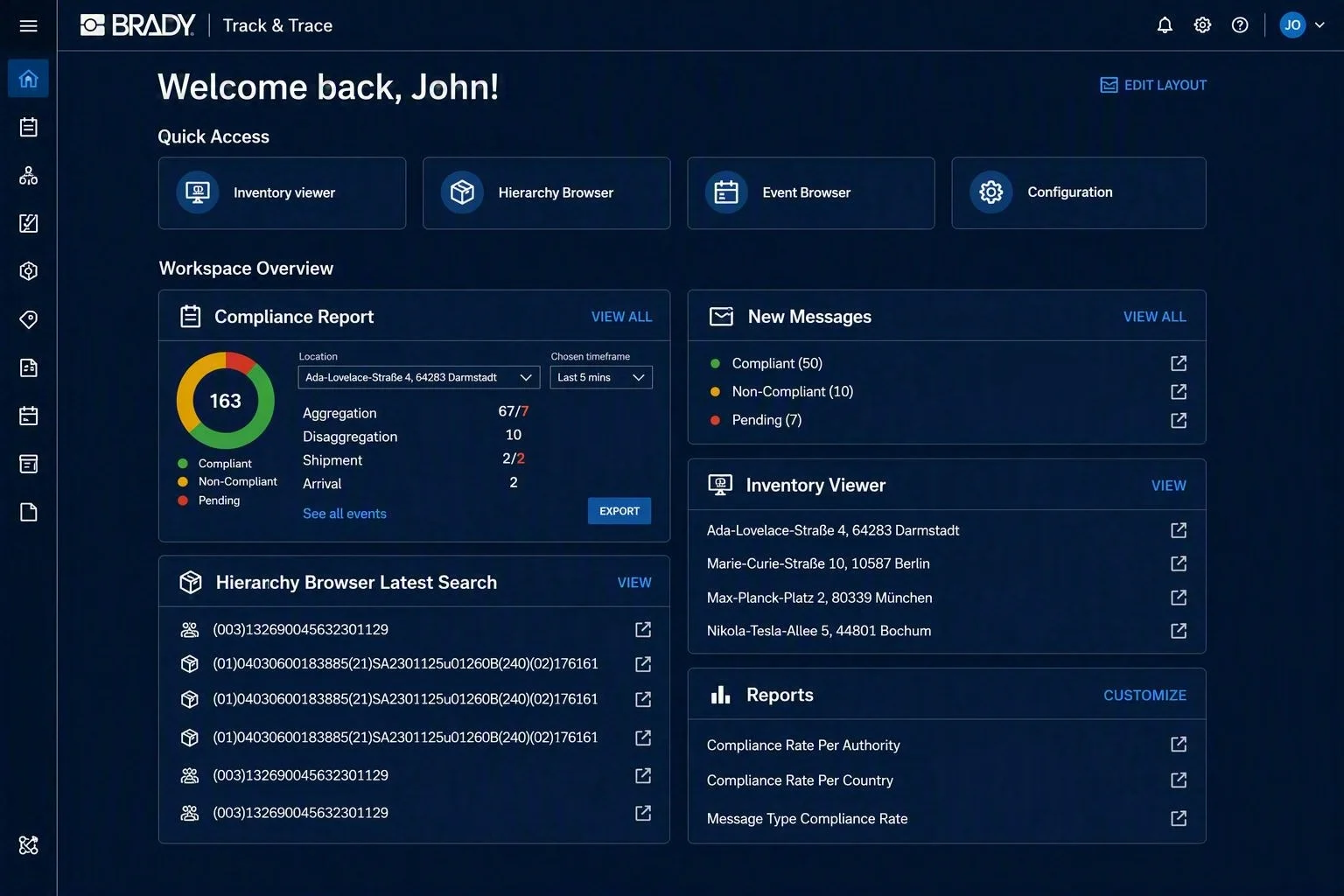
Movilizer Platform
A configurable enterprise platform for secure data capture, system integration and controlled data exchange at industrial scale. Designed to support implementation, integration and scaling across complex regulated environments.
View More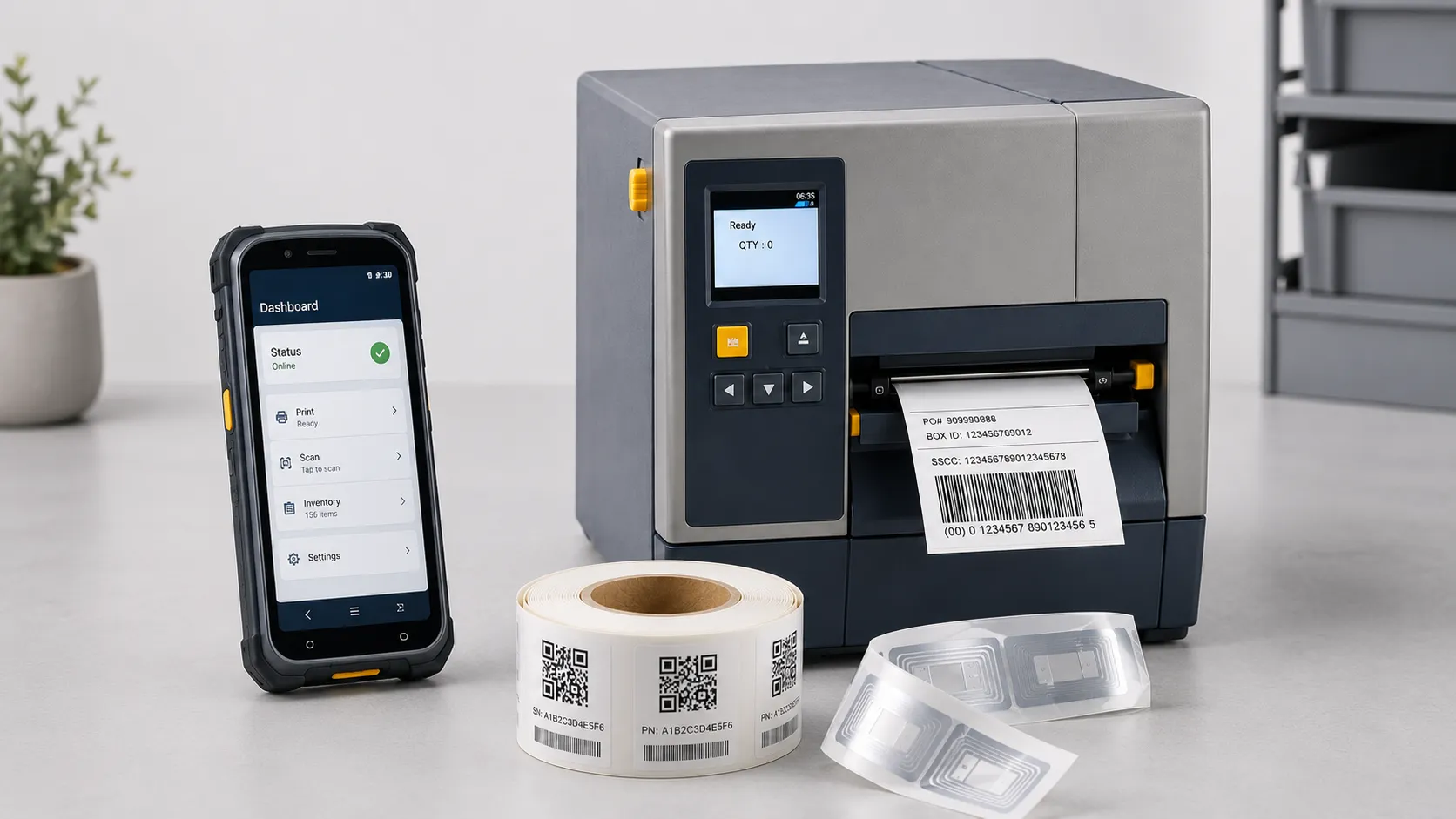
Hardware for Trusted Data Capture
Scanners, printers and mobile devices connect physical products with digital records, supporting trusted data capture for T&T and DPP workflows.
View More
24/7 Technical Support
Global support for compliance, traceability and product-data operations – ensuring critical workflows run reliably across markets and time zones.
View More